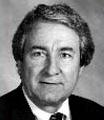
 In the rush to protect the environment at any cost, individual rights have been violated and ignored. Richard L. Stroup advocates restoring people's rights both against polluters and against false claims of damage as the best way to ensure environmental protection.
The perception of crisis has produced far-reaching federal programs, many of which infringe on personal and property rights, says Stroup. Ironically, these programs, some with a blank check on the public, have failed to achieve their goals of cleaning up hazardous wastes, protecting endangered species and preserving wetlands.
Despite enormous powers for the Endangered Species Act, only a few species among the hundreds listed have been successfully removed from the endangered category. That is partly because landowners who allow an endangered species to be found on their land are threatened with the loss of land use and other severe penalties, giving them an incentive to manage their land to discourage the listed species.
Stroup, who has written extensively on the reform of the Endangered Species Act, recommends eliminating the penalties and restrictions now imposed unfairly on landowners.
Most recently, his primary research has focused on the multi-billion dollar Superfund program. He has examined costly efforts to clean up hazardous waste sites even when no proven harm or health risks exist.
The nation's capacity to devote resources to any environmental program is finite. Stroup advocates a principled approach that would utilize market forces by protecting individual rights and putting governmental procurement of services back on budget.
In the late 1970s, Stroup was one of the originators of the New Resource Economics, the academic approach that is popularly known as free market environmentalism.
He is a widely published author and speaker on economics, including natural resources and environmental issues. He is the co-author with James D. Gwartney of a recent primer on economics, What Everyone Should Know About Economics and Prosperity. Stroup also is recognized for introducing the public choice school of economics in a leading economics principles textbook, which he co-authored with James D. Gwartney. Economics: Private and Public Choice is now in its seventh edition.
A native of Washington state, Stroup received his Ph.D. in economics from the University of Washington in 1970. He is a professor of economics at Montana State University and a senior associate of PERC. During the Reagan administration, Stroup served as the director of the Office of Policy Analysis at the Department of Interior.
He lives in Bozeman with his wife and son.
Books
Economics: Private and Public Choice, 8th ed., with James D. Gwartney. San Diego: Harcourt, Brace and Company (1997).
What Everyone Should Know About Economics and Prosperity. Bozeman, MT: Political Economy Research Center (1993).
Articles and Papers
"Superfund: The Shortcut that Failed," PERC Policy Series PS-5. Bozeman, MT: Political Economy Research Center (May 1996).
Superfund is the primary focus of Stroup's recent research, which examines the costly efforts to clean up hazardous waste sites even when no proven harm or health risks exist. He is also exploring land use issues, and writing an economics primer titled What Everyone Should Know About Economics and the Environment.
All materials are available thanks to the financial support of Open Society Institute, Sofia
